Guides
How to Hide Photos on iPhone: When the Hidden Album Isn't Enough
Mehmet Ali Kısacık · Developer of Secure Folder · July 8, 2026 · 7 min read
Updated August 13, 2026
Key takeaways
- The Hidden album moves selected photos to Utilities → Hidden and locks with Face ID on iOS 16 and later, but it's a documented feature in a fixed, well-known location, not a genuine hiding place.
- Hidden photos still sync across every device signed into the same Apple ID, hide a photo on an iPhone and it shows up in the Hidden album on a shared family iPad too.
- The Hidden album unlocks with the same Face ID that unlocks the rest of the phone, so anyone you'd hand an unlocked phone to is one tap away from it, and anyone with the passcode has it too.
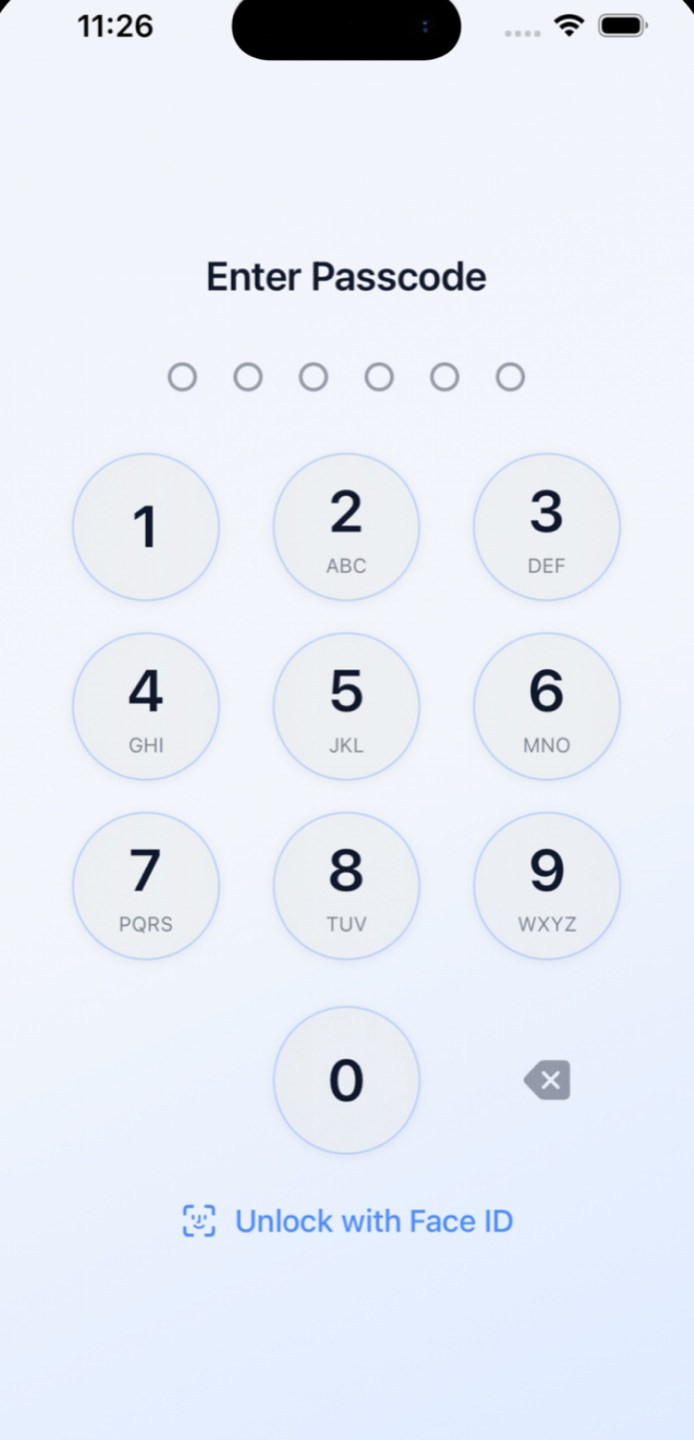
- A dedicated vault app moves photos out of the Photos library entirely into its own app, locked behind a PIN that isn't the phone's passcode, with Face ID as an optional shortcut on top.
- Secure Folder's decoy PIN opens a separate, harmless-looking vault for situations where someone makes you unlock the app, while the real vault stays hidden with no visible switch or badge.
- Because Secure Folder stores everything only on the device, there's no cloud backup if the phone is lost, which means nothing to leak but also means the PIN and any irreplaceable content are the user's own responsibility to keep track of.
- iOS has no control that hides a user-created album. Hiding every photo inside one empties it but leaves the album and its name sitting in your album list, so delete the album afterwards if the name is the part you wanted out of sight.
- An album you create is already private in the sharing sense, since nobody sees it unless you turn it into a Shared Album, but private is not the same as locked and iOS puts no password on an ordinary album.
There are two ways to hide photos on an iPhone: the Hidden album Apple builds into the Photos app, and a dedicated photo vault app. The built-in album is free and takes ten seconds, and for a lot of people it's genuinely enough. But it has real limits that matter the moment someone else handles your phone. This guide covers both methods honestly, including when you should stop at the free one, and answers the question the built-in feature quietly refuses to: whether you can hide a whole album rather than the photos inside it.
The Hidden album: The Hidden album is a built-in iPhone feature that removes selected photos from your main library grid and moves them to a separate album under Utilities. Since iOS 16 it locks with Face ID by default, and it can be made invisible in settings. It hides photos from casual scrolling, but it is a standard feature in a standard place, it syncs to iCloud with the rest of your library, and it unlocks with the same Face ID that opens everything else on your phone.
Method 1: the built-in Hidden album
For hiding a few photos from an over-the-shoulder glance, Apple's own feature is the right first stop:
- Open Photos, then tap and hold the photo you want to hide, or select several and tap the three-dot menu. Tap Hide, then confirm.
- The photos move to Utilities → Hidden, locked behind Face ID by default on iOS 16 and later.
- Hidden photos also stop showing up in your Library, in any other album, and in the Photos widget on your Home Screen.
- To hide the album itself, turn off Show Hidden Album. On iOS 18 and later that setting sits under Settings → Apps → Photos; on earlier versions it is Settings → Photos.
Can you hide a whole album on iPhone?
Not directly, and this is the part Apple's own guide never spells out. Hide is a control that applies to photos and videos, one or many at a time. There is no equivalent control on a user-created album, so no setting anywhere in Photos makes an album you built disappear from your album list.
What actually happens is easy to misread. Hiding every photo inside an album does work, in the sense that those photos leave the Library, the album, and the Photos widget. But the album itself stays exactly where it was, still visible, now just empty. The name you gave it is still sitting there, which for a lot of people is the part they wanted hidden in the first place. If the name is the problem, delete the album after hiding its contents. Deleting an album never deletes the photos inside it.
'Private' is worth separating from 'hidden' too, because the search results for these two questions are full of answers that quietly swap one for the other. An album you make on your iPhone is already private in the sharing sense: nobody else can see it unless you deliberately turn it into a Shared Album or add it to a Shared Library. What it is not is locked. iOS has no password or Face ID prompt for an ordinary album, so anyone holding your unlocked phone can open it.
| What you want | Does iOS do it? | What you actually get |
|---|---|---|
| Hide individual photos | Yes | They move to Utilities → Hidden, locked by Face ID on iOS 16 and later |
| Hide a user-created album | No | You can empty it by hiding its photos, then delete the album if the name matters |
| Password-protect one album | No | Only the Hidden album gets a lock, and it is the same Face ID that opens your phone |
| Keep an album off other devices | No | iCloud Photos syncs albums and hidden state to every device on your Apple ID |
Where the Hidden album falls short
Everyone knows where it is. 'Check the Hidden album' is the first move for anyone actually looking. It's a documented feature in a fixed location, not a hiding place.
It unlocks with your face. The same Face ID that opens your phone opens the album. Anyone you'd hand an unlocked phone to is one tap and one glance away, and if a partner or family member has your passcode, they have the album too.
It follows your iCloud. Hidden photos still sync across every device on your Apple ID. Hide a photo on your iPhone and it's in the Hidden album on the shared family iPad.
There's no separate lock, no decoy, and no record of attempts. The album can't tell you someone looked, and it can't show a snoop something harmless instead.
Method 2: a dedicated photo vault
A photo vault app is a different trust model: instead of hiding photos inside your library, it moves them out of the library entirely, into a separate app with its own lock. Secure Folder: Incogni Vault is our app, so judge accordingly, but the mechanics below are why vault apps exist as a category.
Photos import into protected storage inside the app, locked behind a PIN that is not your phone's passcode (with Face ID as a convenience on top). They stop appearing in Photos, in iCloud, and on synced devices once you delete the originals. The app's icon can be disguised as a calculator or calendar so the vault doesn't advertise itself. A second, decoy PIN opens a harmless fake vault if someone makes you unlock it. And if someone tries guessing, each wrong PIN silently captures a front-camera photo with a timestamp.
The trade-off is honesty about where your photos live: Secure Folder stores everything on your device only. There is no cloud backup, which means nothing to leak, but it also means you should keep your own backup of anything you can't lose, and your PIN is yours to remember.
Which one should you use?
Use the Hidden album if your threat is casual: you hand your phone around to show photos and don't want surprises mid-swipe. It's free, built-in, and fine for that.
Use a vault app if a specific person might actually go looking: a partner, a parent, a roommate, a coworker. The moment someone knows your passcode, or knows to check the Hidden album, the built-in feature has nothing left. A separate PIN, an unfindable icon, a decoy, and an attempt log are what handle that situation.
Common questions
Does hiding a photo on iPhone remove it from iCloud?
No. Photos in the Hidden album remain part of your iCloud Photos library and sync to your other devices. To keep a photo out of iCloud entirely, it has to leave the Photos library, which is what a photo vault app that stores content on-device does.
Can someone find the Hidden album if it's turned off in settings?
Yes. Turning it back on takes one visit to the same setting: Settings → Apps → Photos on iOS 18 and later, or Settings → Photos on earlier versions. Hiding the album stops casual discovery, but anyone deliberately searching an unlocked phone can re-enable it in seconds.
Is a photo vault app safe to use?
It depends on where the app puts your photos. Check whether content is stored on-device or uploaded to the developer's cloud, whether an account is required, and what the privacy policy says leaves your phone. Secure Folder stores everything on-device with no account; other vaults make different trade-offs.
Can you hide an album on iPhone?
No. iOS lets you hide photos and videos, not albums. You can hide every photo inside an album, which empties it, but the album and its name stay visible in your album list. Delete the album afterwards if the name is what you wanted out of sight; deleting an album does not delete the photos in it.
How do you make a photo album private on iPhone?
An album you create is already private in the sense that nobody else can see it unless you turn it into a Shared Album or add it to a Shared Library. It is not locked, though. iOS has no password or Face ID prompt for an ordinary album, so anyone holding your unlocked phone can open it. A separate lock means either the Hidden album or a vault app with its own PIN.
Do hidden photos still show up in the Photos widget or in Memories?
No. Apple's documentation is explicit that hidden photos and videos stop appearing anywhere else in Photos, including the Library, other albums, and the Photos widget on the Home Screen. What hiding does not do is take them out of iCloud, and it does not survive someone opening the Hidden album with the same Face ID that unlocks your phone.
Keep your photos yours.
Secure Folder is free on the App Store — everything stays on your iPhone.